
Understanding and Measuring PWM Losses in High-Speed PM Motors: A Critical Step Toward Reliability
By Saad Thabit, Principal Engineer – DRF Engineering Services LLC
Measuring PWM Losses in High-Speed PM Motors
After spending more than a decade working with high-speed flywheel energy storage systems featuring motors spinning at 20,000 RPM in ultra-high vacuum environments (10⁻⁴ Torr)—I’ve developed a keen appreciation for the significance of every single watt of power loss. In such extreme operating conditions, even minor inefficiencies can lead to a measurable temperature rise, reduced efficiency, and, ultimately, system failure.
Among the most prevalent failure mechanisms in Permanent Magnet (PM) motors is rotor overheating, particularly at the shaft. This is often a direct consequence of high-frequency power losses, primarily introduced by Pulse Width Modulation (PWM) switching in modern motor drive systems.
Why Motor PWM Losses Are a Critical Concern
PWM switching techniques are widely used in inverters and motor drives to precisely control torque and speed. However, these high-speed switching operations introduce voltage and current harmonics, which in turn induce eddy currents and localized heating in the motor—especially in the rotor. This is a critical issue in high-speed applications, where the rotor lacks efficient cooling paths and thermal mass.
The accumulation of heat in the rotor over time can cause:
- Demagnetization of permanent magnets
- Degradation of insulation and bearings
- Premature motor failure
Therefore, accurately quantifying PWM-induced losses is essential for ensuring motor reliability, validating thermal models, and optimizing drive system performance.
Measuring PWM Losses: Methodology
To accurately assess and Measure PWM Losses in a PM motor system, you must measure the total electrical power delivered to the motor and isolate the losses caused by high-frequency harmonics.
- Instrumentation Setup: Install a high-accuracy power analyzer between the drive and the motor.
- Data Acquisition: Use high-bandwidth voltage and current sensors to simultaneously capture all three-phase signals at high sampling rates.
- Power Analysis: Calculate PWM losses using the formula:
The general approach involves the following steps:
PLoss_PWM=P_RMS−P_Fundamental
Where:
- P_RMSP is the total root mean square power, inclusive of harmonic components
- P_ Fundamental is the power at the system’s fundamental frequency only
This approach effectively isolates the high-frequency harmonic contribution that results from switching.
Recommended Test Equipment
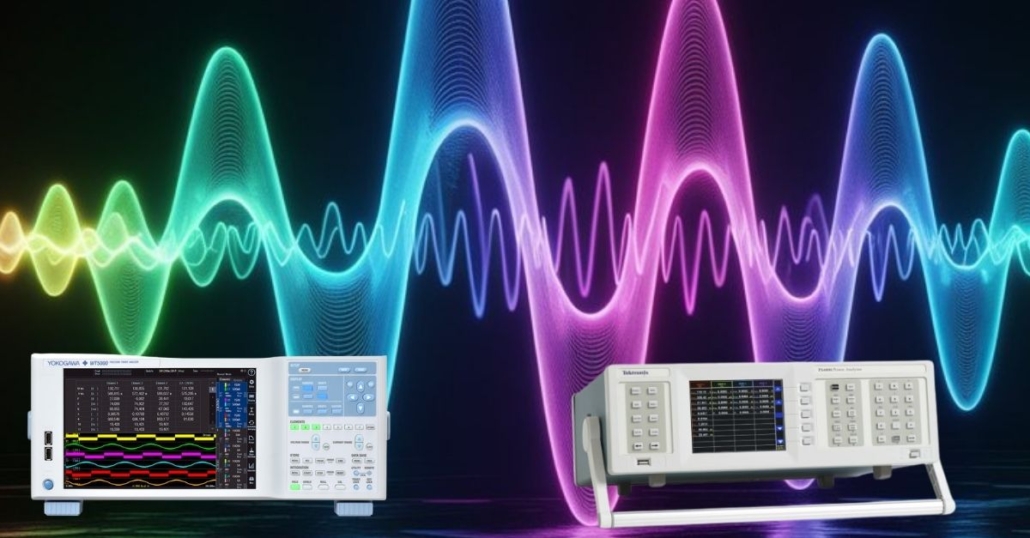
Based on our experience at DRF Engineering Services, the Tektronix PA4000 and Yokogawa WT5000 power analyzers are ideal for this application. These instruments provide high-resolution, high-accuracy measurements of both RMS and fundamental power components, even in systems with complex switching patterns and steep waveform edges.
Beyond Measurement: Simulation and Design Optimization
While measurement is essential, early-stage simulation is equally important for minimizing losses at the design phase. At DRF Engineering Services LLC, we provide simulation support to help engineers:
- Model inverter/motor systems with high fidelity
- Analyze harmonic impact and EMI behavior
- Select optimal topologies and switching schemes
- Predict thermal performance under worst-case conditions
Whether you’re working on a motor drive, DC/DC converter, or grid-tied inverter, our team can help you identify critical inefficiencies and propose robust, scalable solutions.
Get Expert Help With Your Power Electronics Design
At DRF Engineering Services, we bring over 30 years of practical expertise in power electronics, embedded controls, and product validation. From simulation to lab testing and pre-compliance review, we act as an extension of your engineering team to accelerate innovation and improve product quality.
Request a Consultation Today Visit www.drfengineeringservices.com to learn more.
Saad Thabit is the founder and principal consultant at DRF Engineering Services LLC, specializing in power conversion systems, embedded control, and compliance testing. With a proven track record across energy, industrial, and transportation sectors, Saad supports companies from concept through commercialization with deep technical insight and lab-proven results.